
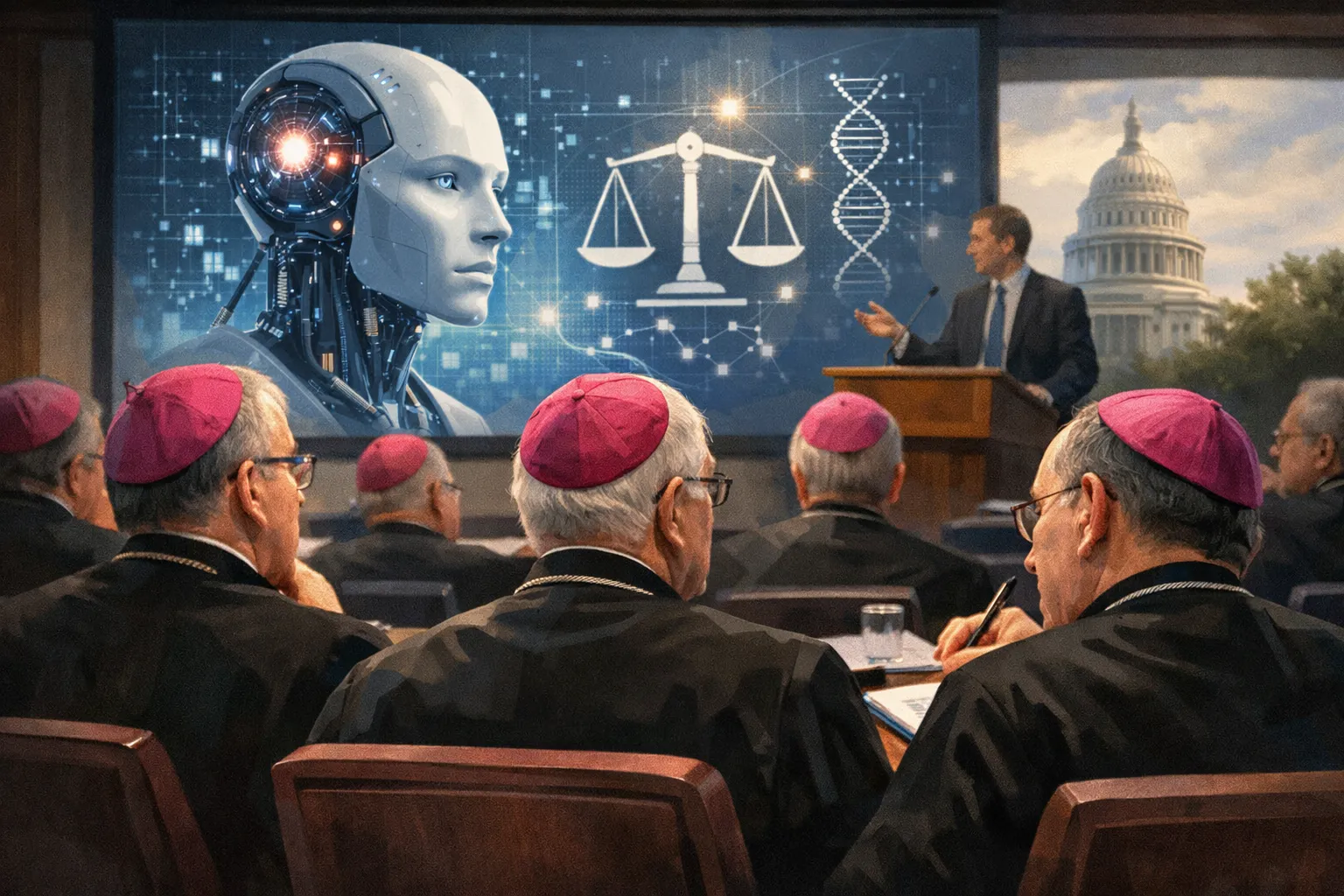
During the U.S. Conference of Catholic Bishops’ fall plenary assembly in November 2026, Bishop Oscar Cantú provided an update on the Church’s efforts to address ethical challenges posed by artificial intelligence (AI). The USCCB’s Task Force on Preserving Human Dignity in the Age of Artificial Intelligence, established in September 2026, engages in dialogue with technology companies, plans educational initiatives with Catholic universities, and advocates for public policies ensuring transparency, accountability, and human oversight in AI development.
Drawing inspiration from Pope Leo XIII’s encyclicals, particularly “Magnifica Humanitas,” the task force emphasizes protecting human dignity amid technological advances. Bishop Cantú highlighted concerns about AI’s impact on jobs, youth development, misinformation, and autonomous weapons, urging thoughtful engagement with these issues. The task force plans to offer formation opportunities for bishops and collaborate with Catholic educators to integrate AI education responsibly.
On public policy, they work with the USCCB’s Government Relations team to promote safeguards including transparency, accountability, and human oversight. Archbishop Paul Coakley, USCCB president, stressed the importance of human responsibility in AI, affirming that humans must remain the decision-makers rather than abdicating authority to machines.
The bishops aim to help society keep humanity at the center of AI discussions, shaping the future with ethical considerations grounded in Catholic teaching.
Original reporting by EWTN News.