
Innovative Framework Combining Urinary Multi-Omics and AI Proposed for Bladder Cancer Management
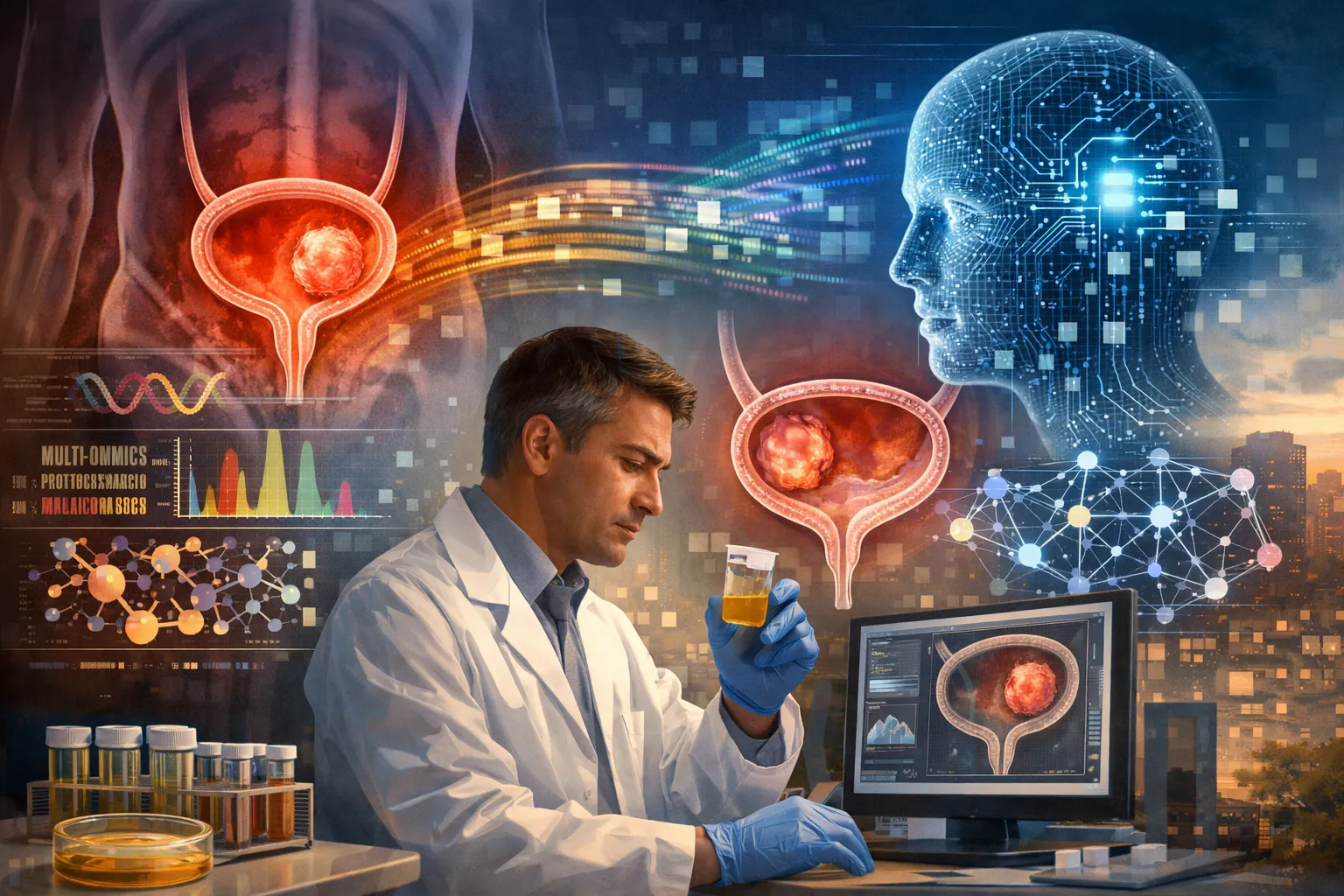
Researchers from Guilin Medical University and Zhengzhou University have proposed a translational framework that integrates urinary multi-omics, microfluidic sample processing, and artificial intelligence to enhance the clinical management of bladder cancer. Bladder cancer is characterized by high recurrence rates and currently requires frequent invasive procedures such as cystoscopy for monitoring. The new approach leverages molecular information in urine—including tumor-derived DNA, methylation markers, extracellular vesicles, and exfoliated tumor cells—to enable non-invasive detection and surveillance.
Advanced machine learning and deep learning methods are employed to interpret complex molecular data, providing diagnostic and prognostic classifications that may reduce reliance on invasive tests. Microfluidic technologies standardize urine sample processing, improving reproducibility and facilitating point-of-care testing.
Several molecular assays, such as the utMeMA methylation assay and Uromonitor mutation test, have demonstrated high sensitivity and specificity in clinical studies. However, challenges remain regarding assay standardization, clinical validation, and cost-effectiveness before widespread clinical implementation. The framework also acknowledges technical obstacles in extracellular vesicle analysis and the need for extensive validation of computational models across diverse clinical settings.
The authors emphasize that integrated urinary multi-omic AI systems must undergo rigorous standardization, adhere to reporting guidelines, and demonstrate cost-effectiveness within clinical workflows. Until such criteria are met and prospective trials are completed, this framework remains a promising research direction rather than an established clinical tool.
Source: Bioengineer.org